
Grandparents’ rights in Scotland
Helping grandparents stay part of their grandchildren’s lives
Grandparents play a special role in the lives of their grandchildren, from the school run and sleepovers to simply being there when they are needed. When parents separate, a parent dies or there is a family breakdown, contact can stop without warning, and the emotional distress for everyone involved can be enormous. If you have been prevented from seeing your grandchildren, our family law solicitors in Glasgow can explain your rights in Scotland and help you find the best way to maintain that relationship.
We act for grandparents in Glasgow and across Scotland. We start by listening, then look for a practical resolution that keeps the focus on your grandchild, whether that is a carefully worded letter, mediation or, where it is needed, an application to the sheriff.
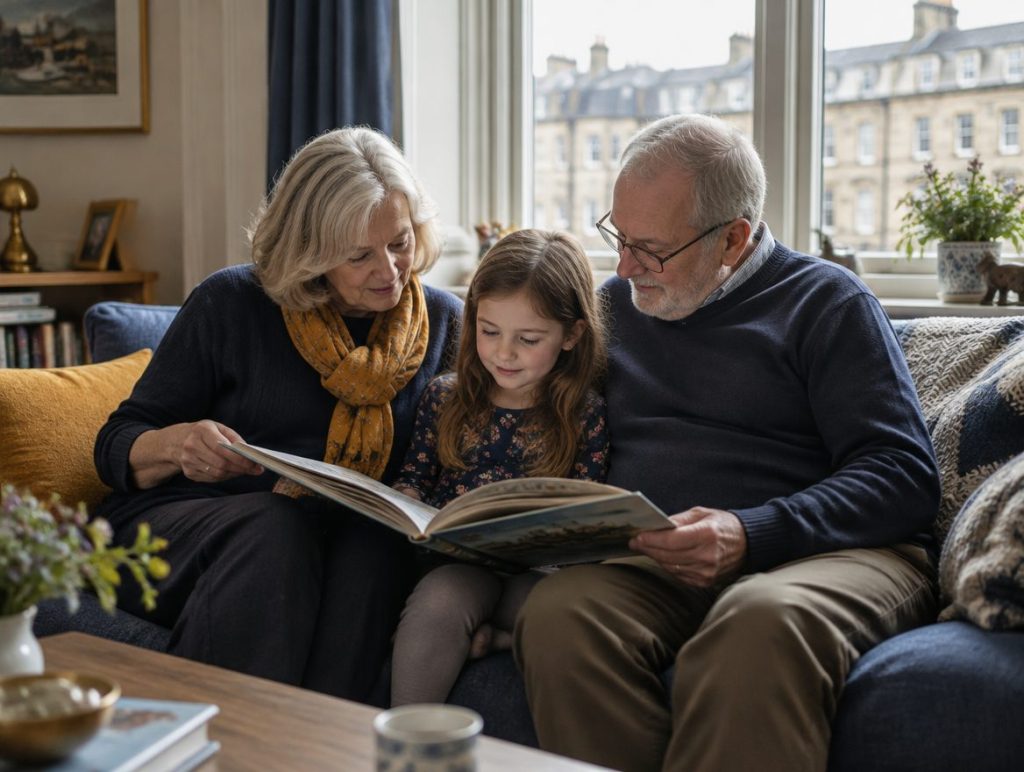
Do grandparents have rights in Scotland?
Grandparents in Scotland do not have automatic legal rights to see their grandchildren. Parental rights and responsibilities belong to a child’s parents, and a parent who holds them can decide who the child spends time with.
That does not mean grandparents have no options. Under section 11 of the Children (Scotland) Act 1995, anyone who can show an interest in a child’s welfare is eligible to apply for an order. Grandparents do not need permission before they apply, which is different from the position in England and Wales. Grandparents may ask the sheriff for:
- a contact order, setting out when you can see or speak to your grandchild
- a residence order, deciding that the child lives with you (known as a kinship care order when a qualifying relative applies)
- parental rights and responsibilities, giving you a legal say in important decisions such as schooling and medical treatment
- a specific issue order, to resolve one particular question about the child’s upbringing
The Scottish Government’s Charter for Grandchildren also recognises the role grandparents play. It is not legally binding, but it sets out what children should be able to expect when their family is going through a difficult time, including keeping in touch with grandparents and the wider family.
How the court decides grandparents’ contact
When a grandparent seeks contact, the sheriff does not ask what is fair to the adults. The decision is made by applying three principles:
- The child’s welfare is the paramount consideration. The question is whether contact with you is in your grandchild’s best interests.
- The child’s views must be taken into account. A child who is able to form a view should be given the chance to express it, and the court gives that view weight according to the child’s age and maturity.
- No order unless it is better than no order. The court will only make an order if doing so is better for the child than making no order at all.
The sheriff will also consider your relationship with your grandchild, why contact stopped, any risk to the child and the effect the dispute between family members is having on them. A close, loving relationship in the past is often the most persuasive evidence a grandparent can give, and it is crucial to show that you will support the stability of the child’s life rather than challenge the parents.
Steps to seeing your grandchildren again
Going to court should be the last resort. Many disputes about grandparents’ rights to contact are resolved amicably without court proceedings, and a sheriff will want to know which of the options available to you were tried first.
1. Talk to the parents
The first step, if it is safe and appropriate, is a calm conversation or a carefully worded letter. We can write to the parents on your behalf in a way that lowers the temperature, and discuss arrangements that suit the family’s circumstances.
2. Family mediation
Mediation involves meeting a neutral mediator who will facilitate a discussion and help everyone look for an agreement. It is usually quicker and cheaper than court, and it helps protect family relationships for the future. Find out more about our collaborative and non-court options.
3. Apply to the court for a contact order
If agreement is not possible, we can raise an action in the sheriff court, usually Glasgow Sheriff Court for families who live in the city. The case will normally call at a child welfare hearing, where the sheriff tries to narrow the issues and may grant interim contact. If the case cannot be settled, it may go to a proof, where evidence is heard and the sheriff makes a final decision. We will help you navigate every stage of the legal process and ensure your evidence is ready for each hearing.
An empathetic, friendly and down-to-earth family law service that is also professional and efficient. Book a free 45 minute consultation or call 0141 471 9166.
Kinship care: when grandparents care for a grandchild
Sometimes grandparents do far more than visit. If your grandchild cannot live with their parents and has come to live with you, you are a kinship carer. That can happen informally within the family, or because social work or a children’s hearing has decided that the child should live with you.
Applying for a residence order, known as a kinship care order when a qualifying relative applies, gives you legal security and the authority to make day to day decisions for your grandchild. Kinship carers may also be entitled to practical and financial support from the local authority, including a kinship care allowance. We can explain your options and help you apply.
If your grandchild is involved with the children’s hearings system and you have had a significant role in their upbringing, you can ask to be treated as a relevant person. That gives you the right to attend the hearing and receive the papers. Find out more on our children’s hearing solicitors page.
Seeking legal advice: how our grandparents’ rights solicitors can help
- Clear legal advice at an early stage about your rights and the likely outcome
- Letters to the parents and negotiation to secure an agreement
- Referral to family mediation, with support and guidance throughout
- Court applications for contact, residence and parental rights and responsibilities
- Representation at child welfare hearings and proofs by an experienced family lawyer
- Advice on kinship care and support from the local authority
Every family is different. We will always be honest with you about your chances and the likely cost before you decide what to do, and we will assist you in the way that best suits your circumstances. To discuss your situation with our Scottish legal team, get in touch or contact us using the details below. If you are a parent facing a contact dispute, see our child contact solicitors page.
Grandparents’ rights: frequently asked questions
Can a parent stop grandparents seeing their grandchildren in Scotland?
Parents must act in their child’s best interests, but a parent with parental rights and responsibilities can decide who their child sees, so they can stop contact in the first instance. If you believe that is not in your grandchild’s best interests, you can ask the court for a contact order and the sheriff will decide what is best for the child.
Do I have to go to court to see my grandchild?
Not necessarily. Many disputes are settled through letters, negotiation or mediation. Court is usually the final step, and the court will expect you to have tried to resolve matters first where it is safe to do so.
Do grandparents need permission to apply for contact in Scotland?
No. Under the Children (Scotland) Act 1995, anyone with an interest in a child’s welfare can apply. You do not need the court’s permission first, but you will need to show that contact would be good for the child.
Can grandparents apply for custody of a grandchild?
Yes. Scots law no longer uses the word custody, but a grandparent can apply for a residence order so that a grandchild lives with them. When a qualifying relative applies, this is known as a kinship care order.
What happens to grandparents’ contact after a divorce or the death of a parent?
Contact often becomes harder after a separation or a bereavement, particularly where the grandparent is related to the parent who has left or died. The law is the same in each case: if contact cannot be agreed, you can apply to the court, which will focus on the child’s welfare.
How much does it cost?
It depends on how far the matter needs to go. A letter or mediation costs far less than a contested court action. We will give you a clear estimate at the start and keep you updated as things progress.


Free 45 minute consultation
Clear, calm advice from our Glasgow family law team. Book online or call 0141 471 9166.

Three Best Rated
We are Family Law specialists in Scotland. With offices in both Glasgow and Edinburgh, we provide legal services across the country. For a Free* consultation with our family lawyers click here.